
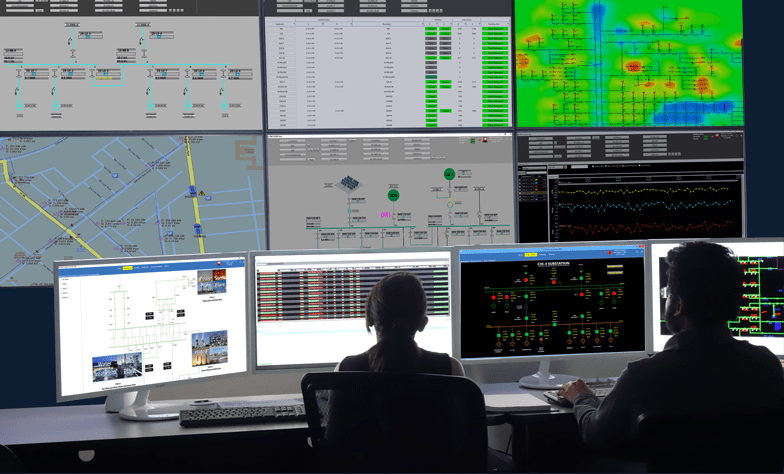
ETAP
A comprehensive ETAP ( Electrical Transient Analysis Program) Training course outline spans from foundational workspace navigating and single-line diagram creation to advance power quality, transient stability, and safety analysis simulations.
Phase 1: Basics and Introduction
ETAP Interface and Introduction:
- Lauchpad, project creation, presentation toolbars, and custom liabrary configurations.
One – Line Diagram ( SLD), Modeling
- Placing AC element,( buses, transformers, cables, synchronous/induction motors and generators
Data Entry & Management
- Inputing electrical, mechanical and physical devices data parameters.
- Load flow analysis ( Basics)
- Standard power flow analysis simulations( 1EEE/IEC ) standards) voltage drop identification and branch loading
Phase 2: Intermediate Analysis Studies
- Symmetrical and asymmetrical fault calculations,3-phase to –line-to ground) line to line, per ANSI/IEEE and IEC
- Motor Acceleration/ Starting study
- Evaluating voltage dips, acceleration time, and successful motor charateria, under statics and dynamics loading.
- Protective device coordination (TCC)S
- TCCs, time-current characteristics curves, selecting fuses, circuit breakers, and relays settings.
- Cable sizing ang De-rating
- Ampacity calculation and schedule generation.
Phase 3: Advance Engineering Studies
- Arc flash analysis, incident energy calculations, boundary determination, and label generation per IEE 1584 and NFPA 70E
- Harmonics Analysis, Modelling no –linear loads, tracking harmonics source, distortions, voltage/current total harmonics distortion(THD) limits and filters placement.
- Transient Stability Analysis, Dynamic response modeling under system disturbances, faults, clearing times and generator rotor angle stability
- Ground Grid system Design, symmetrical grid current, surface potential gradients, and step/touch voltage calculations per IEEE 80.
- Dc Systems & Special Modules, Battery sizing, DC load flow/ short circuit, and renewable energy ( solar/wind integration modeling.






Related Articles