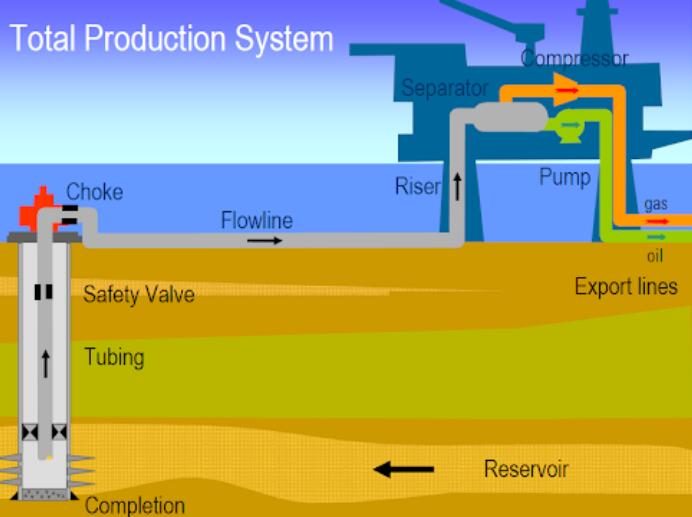
PipeSim training teaches you how to model fluid flow in oil and gas pipelines, wells, and surface networks. A standard 3 to 5-day course covers system design, flow assurance, artificial lift (pumps), and network optimization to maximize production.
Day 1: Fundamentals and Single Branch Modeling
- Software Tour: Learn the user interface and workspace navigation.
- Fluid Characterization: Define “Black Oil” (basic oil, gas, and water) and “Compositional” (chemical) fluid properties.
- Multiphase Flow Basics: Learn about how oil, gas, and water travel together in pipes.
Day 2: Well Performance and System Analysis
- Pressure/Temperature Profiles: Calculate how P (pressure) and T (temperature) drop over the length of a well.
- Nodal Analysis: Balance well inflow (from the reservoir) and outflow (up the tubing) to find maximum production rates.
- PVT Calibration: Match the software’s math to your actual field data.
Day 3: Network Modeling and Case Studies
- Network Creation: Connect multiple wells, flowlines, and processing facilities on a GIS (map-based) canvas.
- Line Sizing: Calculate the exact pipe diameter required to transport fluids without choking flow.
- Case Studies: Solve real-world networking problems based on oil and gas well performance.
Day 4: Flow Assurance and Advanced Wells
- Erosion and Wax Prediction: Identify risks of pipeline blockages and metal damage.
- Horizontal Wells: Model horizontal and complex multi-lateral well designs.
- Downhole Equipment: Add downhole chokes and safety valves to the model.
Day 5: Production Optimization and Artificial Lift
- Gas Lift Design: Calculate how much gas to inject into a well to make the fluid lighter and boost production.
- ESP Design: Size Electrical Submersible Pumps (ESP) to push fluids out of the well.
- Automated Workflows: Introduction to the PipeSim Python Toolkit to automate tasks and export data to Excel.
and exporting fabrication-ready reinforcement details.


Related Articles